Guides · 9 min read
Saving Seed from Your Own Garden
Which flowers come true, how to tell ripe seed from merely dry seed, and the storage method that keeps a packet viable for years. This is how a garden begins to pay for itself.
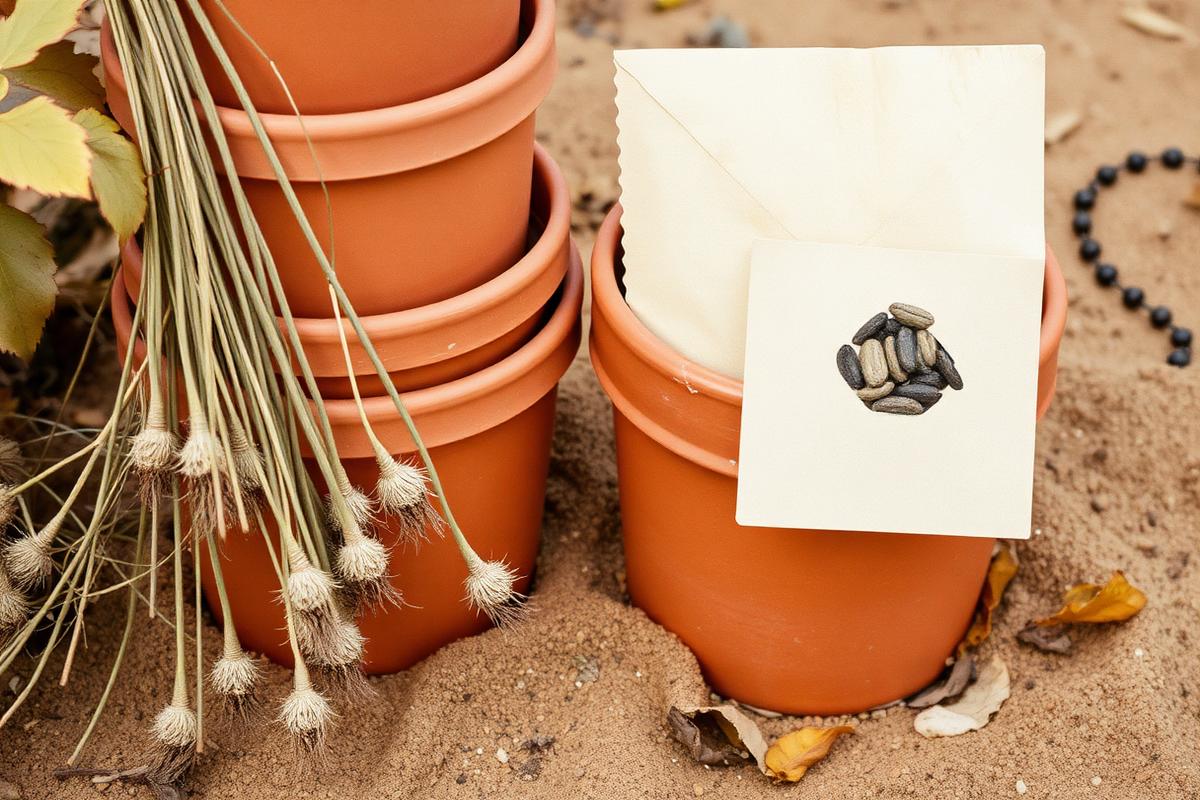
Every heirloom variety in existence survives because somebody let a few plants go over, collected the seed, and did it again the next year. It is the oldest garden habit there is, and on a still, dry afternoon in late summer it is also the most pleasant.
What comes true, and what will not
Save seed from open-pollinated varieties. These are the old, stable sorts — the ones whose offspring resemble the parent. Every heirloom is open-pollinated.
Do not bother with F1 hybrids. An F1 is the first cross of two distinct parent lines. Its seed will germinate perfectly well and produce a mixed, usually disappointing generation. If a packet says F1, enjoy the plant and buy fresh seed.
Then there is crossing. Some plants pollinate themselves before the flower even opens and are reliably true from seed with no effort:
- Easy and reliable: tomatoes, peas, beans, lettuce, sweet peas, nigella, calendula, poppies, larkspur, honesty, aquilegia (colour will drift, cheerfully).
- Needs isolation to stay true: squash, courgette, cucumber, brassicas, beetroot, chard, and most of the umbellifers. These cross freely with anything of the same species flowering nearby, including a neighbour's.
If two varieties of the same species are in flower within insect range, expect a mixture. That can be a delight or a nuisance, depending on your temperament.
Choose the parent plant, not the leftover one
Do not save from whatever happens to be left at the end. Walk the patch in full flower and mark the best plants with a ribbon: the strongest, the healthiest, the truest to type, the ones that flowered longest or resisted mildew when their neighbours sulked. Save from three or four plants rather than one, to keep some genetic breadth.
Never save from a diseased plant. Several diseases travel on and in seed.
Ripe, not merely dry
This is where most home seed saving goes wrong. Seed must finish ripening on the plant. A pod cut green will dry, and it will look convincing, but the embryo inside was never finished and will not grow.
Signs of true ripeness:
- Pods (sweet pea, larkspur, honesty, nigella): the pod is papery, brown and rattles. Sweet pea pods often twist and crackle.
- Seed heads (calendula, poppy, scabious): the head is brittle and seed loosens with a light touch. Poppy capsules develop open vents at the top — that is the moment.
- Fleshy fruit (tomato): slightly past eating ripe, soft and fully coloured.
Cut on a dry, still day, ideally after two or three rainless days. Never collect damp seed.
Cleaning, by type
Dry seed: tip pods and heads into a paper bag and let them finish for a week somewhere warm and airy. Then crush by hand and winnow — pour gently from one bowl to another in front of a fan or a light breeze, so the chaff blows away and the heavier seed falls. Repeat two or three times. Perfectly clean is not necessary; chaff-free enough not to hold damp is.
Tomatoes need fermenting. Scoop the pulp and seed into a jar, add a splash of water, and leave it at room temperature for three to four days until a film forms on top. This breaks down the germination-inhibiting gel around each seed and kills some seed-borne disease. Then tip in plenty of water — viable seed sinks, pulp and dud seed float. Pour off the floaters, rinse the sinkers in a sieve, and spread them on a plate to dry.
Dry all seed on a plate or a sheet of paper, never on kitchen roll or cloth, which it will glue itself to. Somewhere warm and airy, out of direct sun. Ten days is not too long.
Storing: cool, dark, dry — and the rule of a hundred
The old rule of thumb: the temperature in Fahrenheit plus the relative humidity should add up to less than 100. In practice this means paper envelopes — never plastic, which traps moisture — inside an airtight tin with a silica gel sachet, kept in an unheated cupboard or the bottom of the fridge.
Label at the moment of collection, not later: variety, date, and where it grew. Every seed saver has a jar of anonymous brown seed and regrets it.
Rough viability, stored well:
- 1–2 years: parsnip, delphinium, angelica, onion
- 3–4 years: calendula, cosmos, sweet pea, nasturtium, most beans
- 5+ years: tomato, lettuce, poppy, nigella
Test before you sow a whole tray
In late winter, count ten seeds onto damp kitchen paper, fold it into a labelled sandwich bag, and keep it somewhere warm. Check after a week or two. Eight sprouted means excellent seed and normal sowing. Three means sow thickly. None means compost the packet and start again — better to know in February than in May.
Save seed from the plant that pleased you most, three years running, and you will slowly end up with a strain that suits your own soil and your own weather better than anything you can buy.