Guides · 9 min read
How to Sow Seeds That Actually Come Up
Most seed failures happen in the first ten days, and almost always for one of five reasons. Here is how to get an even, sturdy stand of seedlings from the packets on your windowsill.
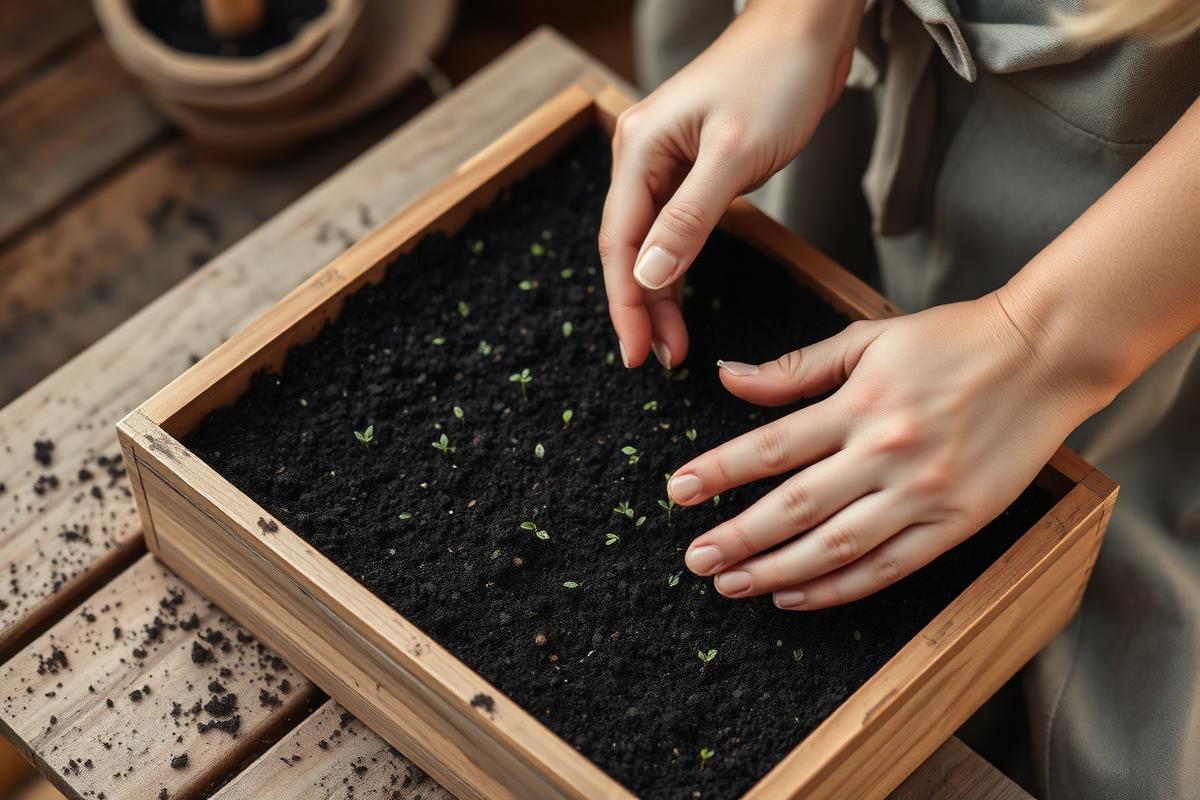
Germination is not luck. A seed is a packed lunch with a plant inside it, and it will open when four conditions are right: moisture, temperature, air, and — for a handful of species — light. Get those four right and you will not need to sow twice.
Start with the compost, not the seed
Use a fresh, fine, low-nutrient seed compost. Old multipurpose from the back of the shed is lumpy, often too rich, and frequently carries fungus gnats. High-nutrient compost makes soft, sappy seedlings that flop.
Fill the tray loosely, strike it level with a ruler, then firm it gently with a flat board until the surface sits about a centimetre below the rim. You want it firm enough that water does not channel down the sides, not so compacted that roots have to fight.
Water the compost before you sow, not after. Stand the tray in shallow water until the surface darkens, then let it drain for twenty minutes. Sowing onto pre-moistened compost means you never blast the seed out of place with a watering can.
Sowing depth: the one rule worth memorising
Cover a seed to roughly twice its own depth. That is the whole rule.
- Dust-fine seed (foxglove, snapdragon, poppy): surface-sow, do not cover at all. These need light to germinate.
- Medium seed (cosmos, calendula, tomato): a scant 5mm of sieved compost or fine vermiculite.
- Large seed (sweet pea, nasturtium): 2cm, pushed in with a pencil.
Vermiculite is worth buying. It covers without compacting, holds moisture, and lets light through — so it is safe even over seed that wants light.
Sow thinly, then thin ruthlessly
Crowded seedlings compete for light, stretch, and then damp off in a single humid night. Space seed at least 2cm apart, or sow into modules — two or three seeds per cell, then snip out all but the strongest with scissors. Snip, never pull: pulling tears the roots of the seedling you meant to keep.
Temperature, and why the airing cupboard betrays you
Most hardy annuals germinate happily at 15–18°C. Half-hardy things like cosmos and tomatoes want 18–22°C. Very few want more, and almost nothing wants a dark airing cupboard for more than a few days — the moment a seedling emerges in the dark it becomes a pale, leggy thread that never recovers.
Check daily. The instant you see the first loop of a stem, the tray moves to the brightest, coolest place you have.
Light, and the leggy-seedling problem
Leggy seedlings are a light problem, not a water problem. A windowsill gives light from one direction only, so turn trays 180° every day, and stand a sheet of white card or foil behind them to bounce light back. If you sow in late winter, a simple LED grow light 10–15cm above the tray for 14 hours a day is the single best investment you can make.
Damping off, and how to never see it again
Damping off is a fungal collapse at soil level — a seedling that was fine yesterday is toppled today, with a pinched, brown stem.
Prevention is entirely cultural:
- Clean trays: hot soapy water, rinsed.
- Fresh compost, never reused.
- Water from below, and let the surface dry slightly between waterings.
- Air movement — take propagator lids off as soon as seedlings appear, and crack a window on mild days.
- Do not overwater. More seedlings drown than dry out.
Potting on, and hardening off
Pot on when the first pair of true leaves — the ones that look like the adult plant, not the smooth seed leaves — is fully open. Hold the seedling by a leaf, never the stem; a crushed leaf is replaceable, a crushed stem is not.
Before anything goes outside permanently, harden it off over 7–10 days: a few hours outside in shelter, building to a full day, then a night out under fleece, then plant. Skipping this step is why healthy indoor plants turn silver and stall in their first week outdoors.
The five reasons seed does not come up
When a tray fails, it is almost always one of these:
- Sown too deep. Fine seed buried 1cm will exhaust itself before it reaches light.
- Dried out for a day. A seed that has taken up water and then dries dies. One warm afternoon is enough.
- Too cold, or wildly fluctuating. A cold conservatory at night undoes a warm day.
- Old seed. Parsnip and delphinium are short-lived; most flower seed is good for 2–3 years if kept cool, dark and dry.
- It needed a cold spell. Some perennials — lavender among them — germinate far better after a few weeks of cold. That is not failure, it is a dormancy you have not broken yet.
Keep a note of sowing date, compost, and where the tray sat. Two seasons of notes will teach you more about your own windowsills than any book can.