Tips · 8 min read
Growing Lavender from Seed, Patiently
Lavender from seed takes a season longer than a bought plant and costs a fraction as much. The trick is a cold spell before sowing, gritty compost, and never being kind to it afterwards.
Lavender is a plant of dry Mediterranean hillsides — thin soil, hard sun, sharp drainage, no feeding and no fuss. Almost every lavender that dies in a garden dies of kindness: rich soil, heavy mulch, winter wet, and a well-meant hard prune into old wood.
Grown from seed it takes patience — flowers usually in the second summer — but a single packet gives you a whole hedge.
Cold first: stratification
Lavender seed germinates erratically unless it has had a cold period. Mix the seed with a little just-damp vermiculite or sand in a labelled bag and keep it in the fridge (not the freezer) for three to four weeks before sowing. Germination rates roughly double.
Sowing, in late winter
Sow February to April, after the fridge spell.
- Use a gritty, free-draining mix: two parts peat-free seed compost to one part horticultural grit or perlite.
- Surface-sow — lavender needs light to germinate — and press the seed gently into contact with the compost. Cover with the barest dusting of vermiculite, or nothing at all.
- Water from below, then cover the tray with a propagator lid or clear bag.
- Keep at 18–21°C, in good light.
Germination is slow and uneven: anywhere from two to six weeks. Do not tip the tray out at three weeks. Keep it only just moist — lavender seedlings rot far more readily than they dry.
Seedlings
As soon as seedlings appear, take the lid off. Air movement is everything with this plant. Grow them cool and bright; warm and stuffy produces soft growth that damps off.
Pot on into 9cm pots of gritty compost when two or three pairs of true leaves have formed. Handle by the leaf. Pinch the tip of each plant once it is 8–10cm tall to build a bushy base — a lavender that is allowed to run up on one stem becomes a sprawling, hollow-centred plant within three years.
Harden off carefully over 10 days and plant out after the last frost, once plants are well rooted.
Where to plant it
- Full sun. Not most of the day — all of it.
- Sharp drainage. On heavy clay, plant on a low ridge or raised bed and work in plenty of grit. Winter wet at the roots kills more lavender than cold ever does.
- Poor soil, no feed, no rich compost. Lean ground gives you dense, aromatic, long-lived plants.
- Space 30–45cm apart for a hedge, 60–90cm for specimens.
Mulch with gravel or grit, never with bark or compost, which holds damp against the stem.
Pruning: the rule that keeps it alive
Lavender does not reliably regrow from bare old wood. That single fact governs everything.
- After flowering (August–early September): shear the whole plant into a tight dome, taking off the spent flower stems plus 2–3cm of the current year's green growth. Always leave green growth and some leaves below your cut.
- Never cut back into the grey, leafless wood. It will not come back.
- Prune every single year from the first. An annually clipped plant stays dense for 10–15 years; a plant left unpruned for three years is already open-centred and beyond rescue.
Harvesting for scent
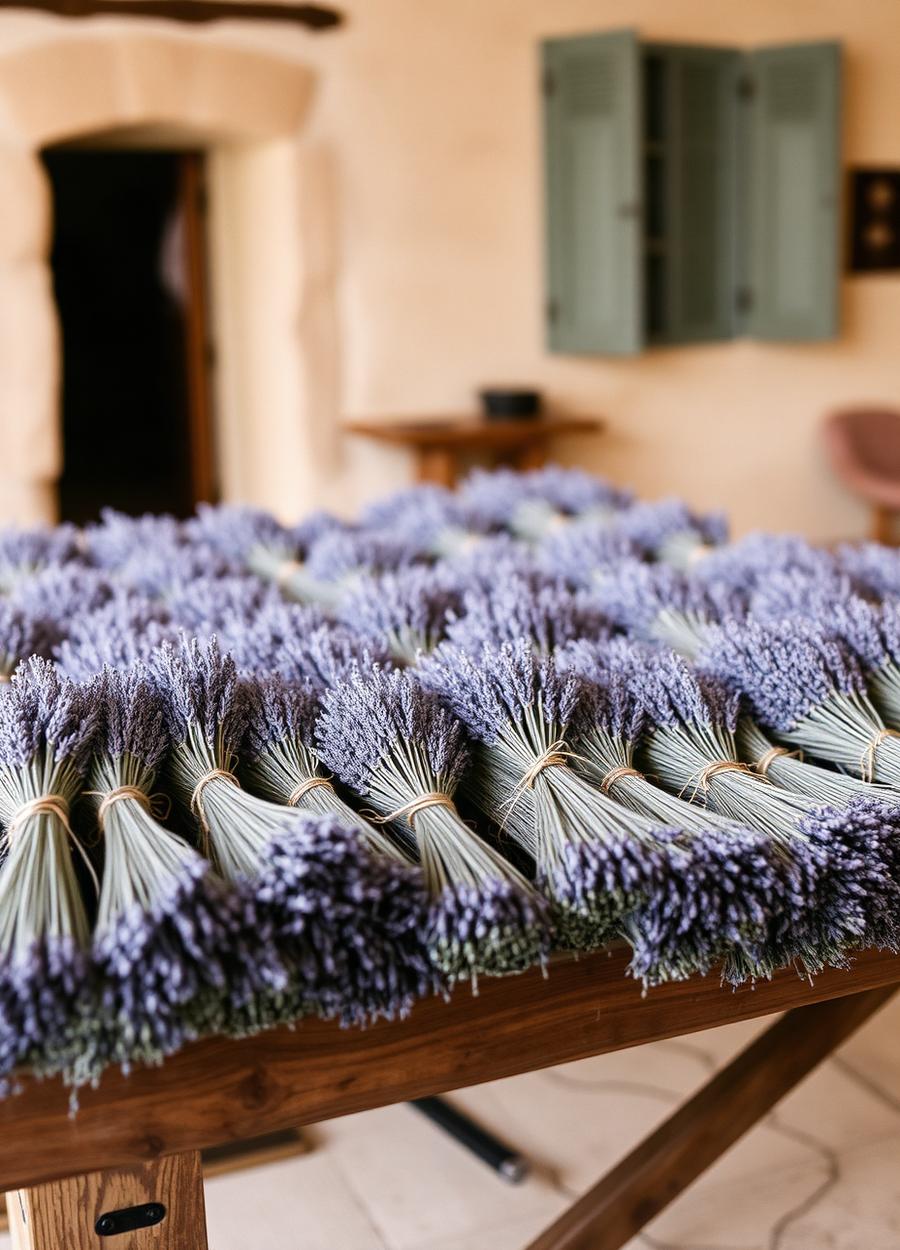
Cut for drying just as the lowest florets on each spike open — that is when the oil content peaks. Cut in the morning after the dew has gone, bundle in small bunches, and hang upside down somewhere dark, warm and airy. Dark matters: sunlight bleaches the colour out.
Once dry, strip the buds into a jar with a lid. They keep their scent for a year or more, and revive if you rub them between your fingers.
Give lavender sun, grit, and one firm haircut a year. Give it anything more generous and it will disappoint you.